

By Thomas Whitfield · Contributing Writer
Published · Updated
Answer in brief
Orlando premiums track close to the Florida average: full coverage commonly runs $2,300–$3,300 a year for a typical adult driver. Tourist traffic on I-4 and the attractions corridor, rapid population growth and summer storms shape the territory, while a lower theft rate than South Florida keeps comprehensive more moderate. Orlando drivers see meaningful differences between insurers and should compare at each renewal.
The Orlando territory
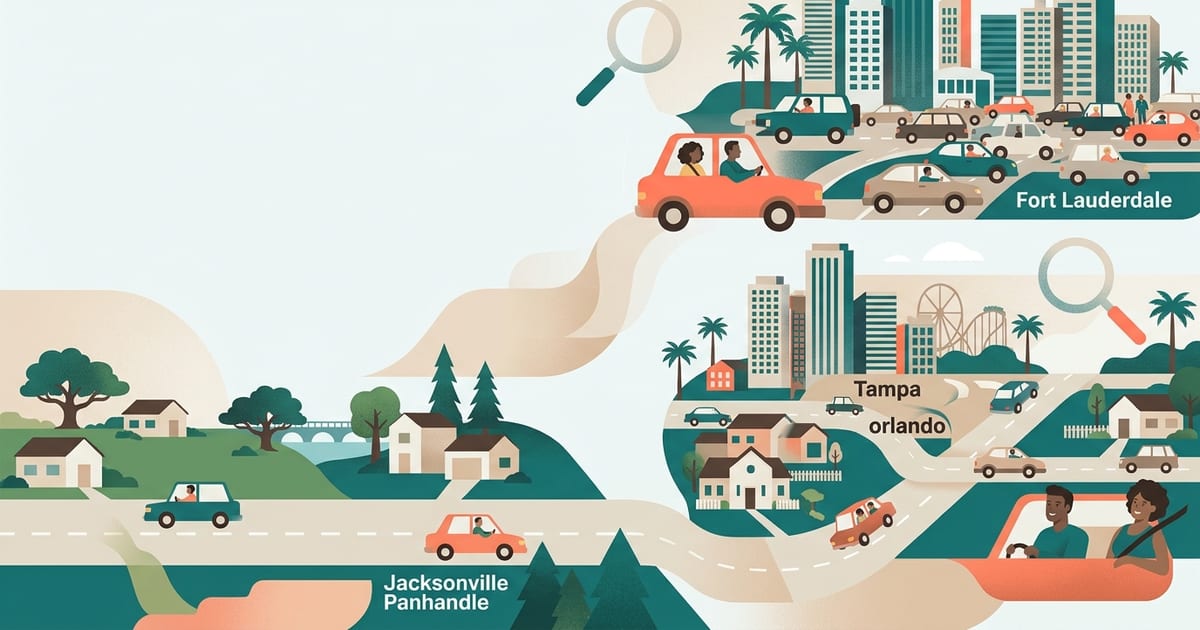
Orange County's road network carries tens of millions of visitors a year, many in rental cars and unfamiliar with the roads. Crash frequency on I-4 and around the theme-park corridor is high, but injury litigation and theft are lower than in Miami-Dade, so Orlando ends up near the state average rather than above it. Suburbs such as Winter Garden, Oviedo and Lake Nona are typically a little below downtown rates.
Local notes
Summer thunderstorms and the occasional hurricane make comprehensive worth keeping on most cars; see hurricane and flood coverage. Many Orlando households have one commuter and one short-trip driver, which is a good fit for telematics or pay-per-mile pricing on the second car.
Terms: Rating territory, Comprehensive coverage
Sources and references
Legal figures on this page (minimum limits, filing periods, statutory benefits) are checked against the primary law or the state insurance regulator listed below. Links and figures last verified Nov 2026.
- Fla. Stat. § 627.736 — required personal injury protection benefits — Florida Legislature (Online Sunshine), Fla. Stat. § 627.736Primary lawPIP: $10,000 medical and disability benefits, $5,000 death benefit; 80% of reasonable medical expenses, 60% of lost income; initial care within 14 days; $2,500 cap without an emergency medical condition.
- Fla. Stat. § 324.022 — property damage liability requirement — Florida Legislature (Online Sunshine), Fla. Stat. § 324.022Primary lawEvery owner must maintain at least $10,000 property damage liability (or a $30,000 combined single limit with PIP).
- Facts + Statistics: Auto insurance — Insurance Information Institute (2025)Statistical dataNAIC countrywide average auto expenditure: $1,127 (2022), $1,282 (2023); most expensive states in 2023 were Florida, Louisiana and New York.
- Estimated percentage of uninsured motorists by state, 2017–2023 — Insurance Information Institute (2025)Statistical dataIRC time series by state; 2023: Mississippi 28.2%, New Mexico 24.1%, D.C. 23.1%, Michigan 22.3%, Florida 20.6%, California 20.4%, Texas 14.5%; lowest Maine 5.7%.
- Fatality facts: State by state — Insurance Institute for Highway SafetyStatistical dataCrash deaths and death rates per 100,000 population and per 100 million miles by state.
- What determines the price of an auto insurance policy? — Insurance Information InstituteConsumer guidanceRating factors: driving record, mileage, location, age, gender, vehicle, credit-based insurance score, coverage choices. Notes ZIP-code rating is prohibited in California and Michigan and gender rating is prohibited in seven states.
Practical guidance on this page is original editorial work. Cited sources support factual statements and do not endorse this site. Dollar ranges described as typical or illustrative are editorial estimates, not figures from these sources.
Entry
Car Insurance in Miami
Why Miami-Dade is Florida's most expensive insurance territory, typical costs, and how Miami drivers can keep premiums manageable.
Entry
Car Insurance in Tampa
Tampa Bay car insurance costs, the I-275 and Gandy corridors, storm surge exposure, and how Hillsborough and Pinellas rates compare.
Entry
Car Insurance in Jacksonville
Jacksonville has some of the lowest car insurance costs among Florida's large cities. Why Duval County is cheaper and what still matters.
Parent guide
Car Insurance Rates by City in Florida
How car insurance costs differ across Florida cities, from Miami and Fort Lauderdale to Jacksonville, Tampa, Orlando and the Panhandle.